
CDPL frequently tells stories of our attorneys’ work on behalf of clients, but one aspect of our capital defense work often flies below the radar: Our deep commitment to mitigation. Summer intern Lichel Johnston spent time with CDPL’s two staff mitigation investigators to help explain this key aspect of preventing death sentences and executions in North Carolina.
By Lichel Johnston
A jury deciding whether someone lives or dies usually knows that person through one thing: The crime for which they stand accused. It’s the job of a mitigation specialist to place the crime in the context of a life.
“Violence doesn’t spring from nowhere,” said CDPL Mitigation Investigator Zach Rowles “When we research our clients’ backgrounds, we see that virtually every one of them has suffered some kind of serious trauma or deprivation. And despite what they have endured and the harm they have caused, our clients still have people who love them and a wish to do good with their lives. Juries deserve to know their full stories as they make life and death decisions.”
At CDPL, mitigation is a key part of our work to stave off death sentences and executions. Our small staff includes two full-time mitigation investigators, Zach Rowles and Stephanie Bouis. Both have decades of experience in the field. They represent clients alongside legal teams, and their meticulous research helps attorneys tell life-saving stories in court.
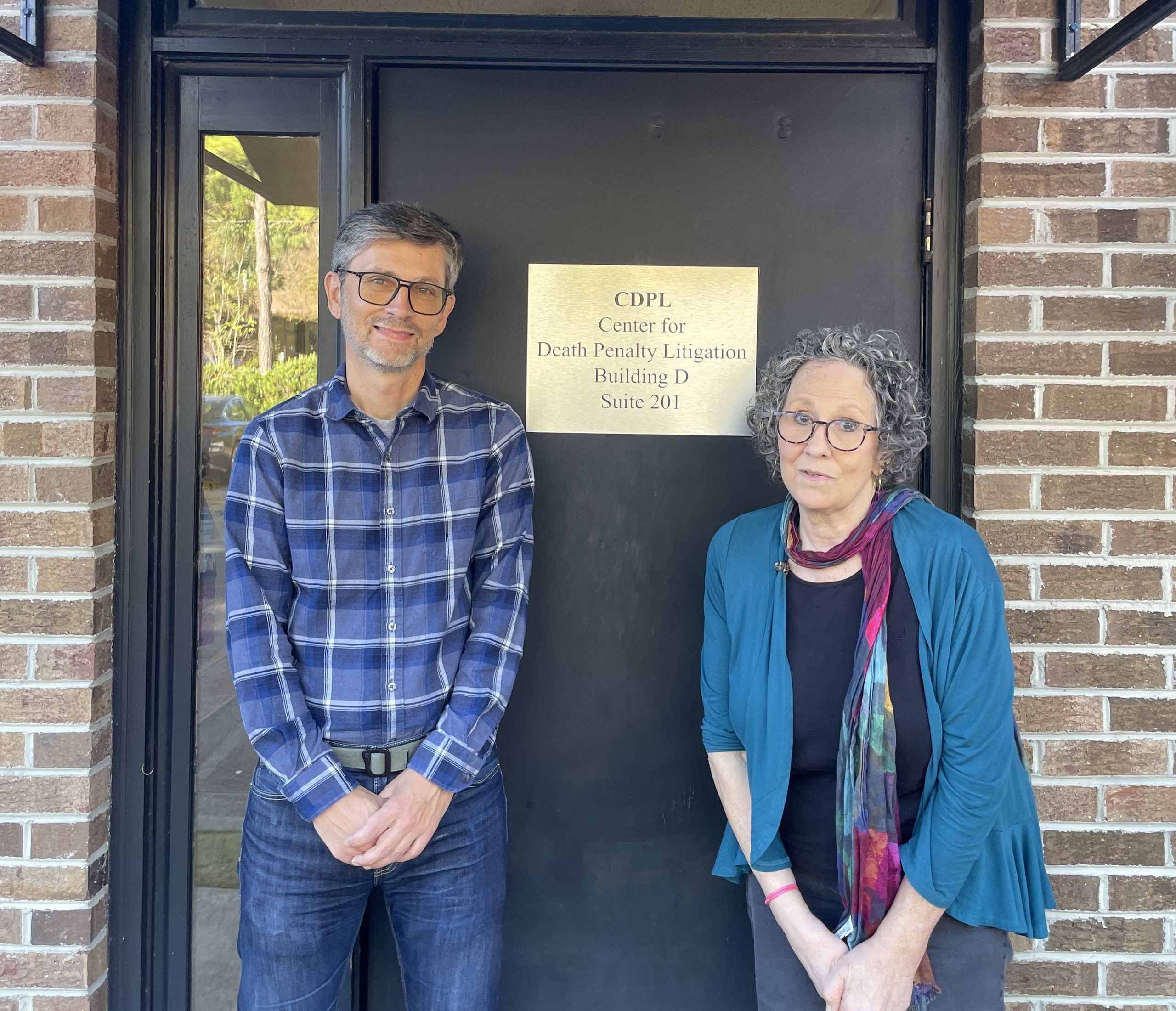
Zach and Stephanie emphasize that mitigation is not an excuse for actions, but rather a fuller explanation of a tragic event. Mitigation reveals the trauma, poverty, and violence that came before the crime and shows that a person is more than their worst moment. It reveals the positive impacts they’ve had in their lives and the changes they’ve made since their arrests. Even from jail, many clients are able to offer support to others, whether by encouraging their children in their studies or helping friends in their job searches.
“Mitigation helps the people making these decisions see the whole person, rather than just seeing our clients through the lens of the charge,” said Stephanie. “When a jury can see a person’s full humanity, it becomes much harder to sentence that person to death.”
In addition to representing their own clients, Zach and Stephanie also recruit and train a new generation of mitigation specialists across the state.
They facilitate training sessions for aspiring mitigation specialists, passing down not just the theory of the job, but also the practical, on-the-ground skills it takes to do it well. They’ve developed sample documents and templates so new practitioners aren’t left guessing. Zach and Stephanie also mentor practitioners on their first assigned cases.
Outside of training, they also help keep the state’s mitigation specialists connected. “Mitigation specialists can be isolated,” Stephanie said. “It’s important to share resources, support each other, and find solutions.” The community meets quarterly, keeps in touch over email, and leans on each other for support.
The community keeps running despite chronic underfunding. The top pay rate for mitigation work is the same as it was 25 years ago, capped at $60 an hour. Regardless, CDPL knows the value of this work and is committed to maintaining a strong pool of mitigation specialists long into the future.